July 28, 2026
YouTube Description Generator AI: A ScriptPilot Workflow for YouTube Creators
Use youtube description generator AI to plan YouTube videos for your audience with ScriptPilot trend, idea, script, Shorts, and SEO workflows.
- youtube description generator AI
- YouTube SEO
- YouTube creators
- ScriptPilot
- YouTube marketing
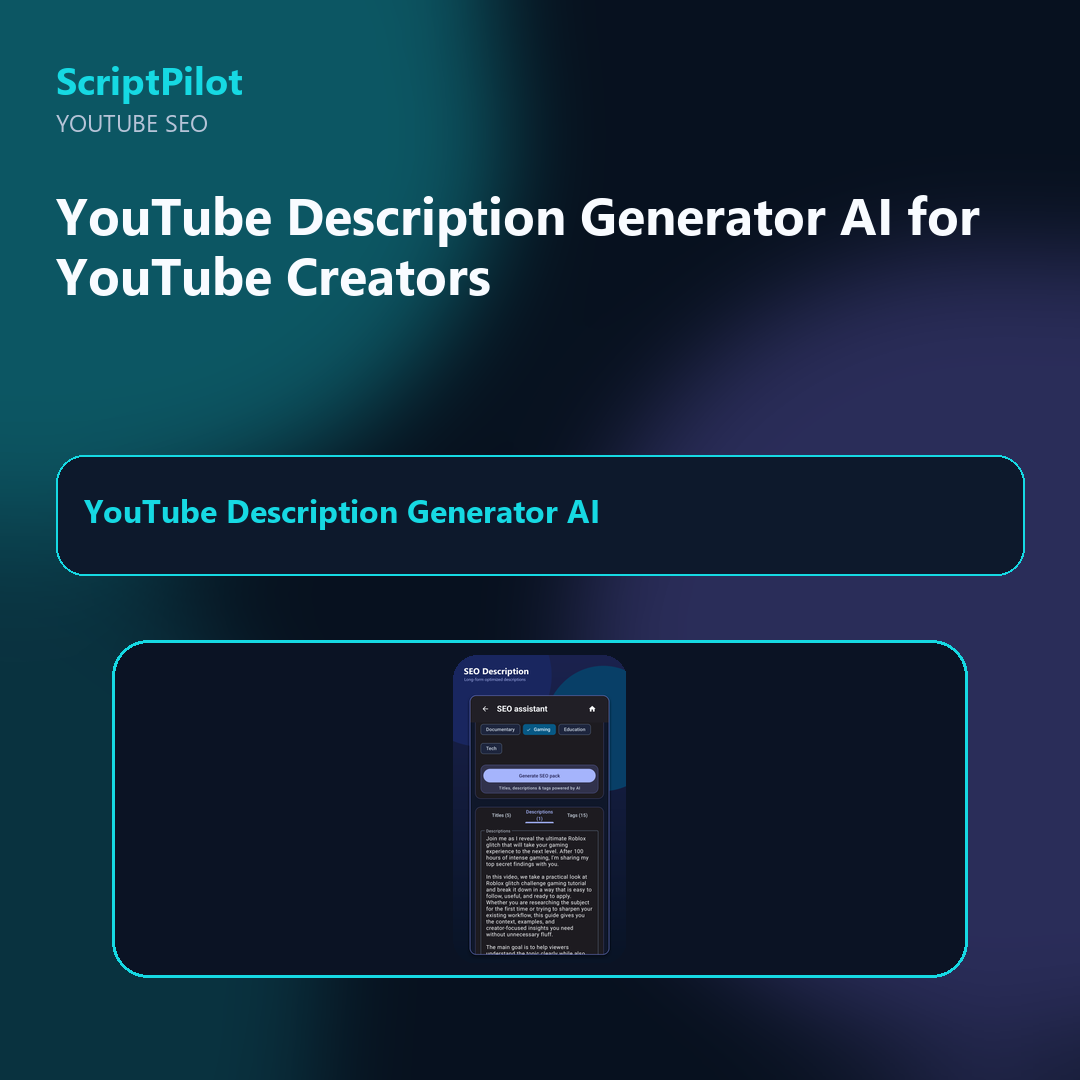
YouTube Description Generator AI: A ScriptPilot Workflow for YouTube Creators
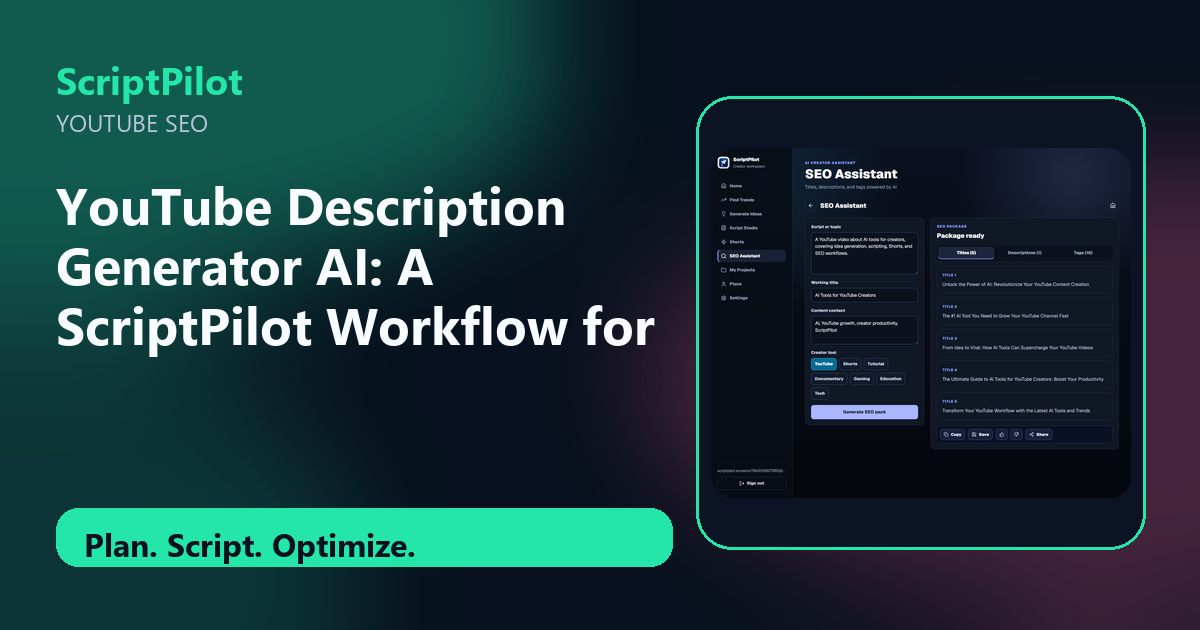
If you are planning your next YouTube video, youtube description generator AI should do more than sit in a keyword list. It should help you choose a viewer problem, shape a promise, and decide what to create next. This guide shows a practical ScriptPilot workflow to make your title, description, and tags support the same promise while keeping the content useful and searchable.
Quick SEO Brief
- Target keyword: youtube description generator AI
- Audience: YouTube creators, solo creators, creator teams, and video marketers
- Search intent: learn how to use youtube description generator AI for a practical content workflow
- Content goal: help the reader move from planning to publish-ready assets with ScriptPilot
- Recommended CTA: try ScriptPilot for SEO Assistant and continue into the next workflow step
Why youtube description generator AI is a strong starting point
The phrase has enough intent to guide a creator workflow. Instead of writing a broad video about content creation, use youtube description generator AI to identify what the viewer wants to solve right now. A good creator content brief should name the audience, the problem, and the outcome in plain words. This is especially useful when you create for viewers in your core markets, because the promise needs to be clear before the viewer decides to click.
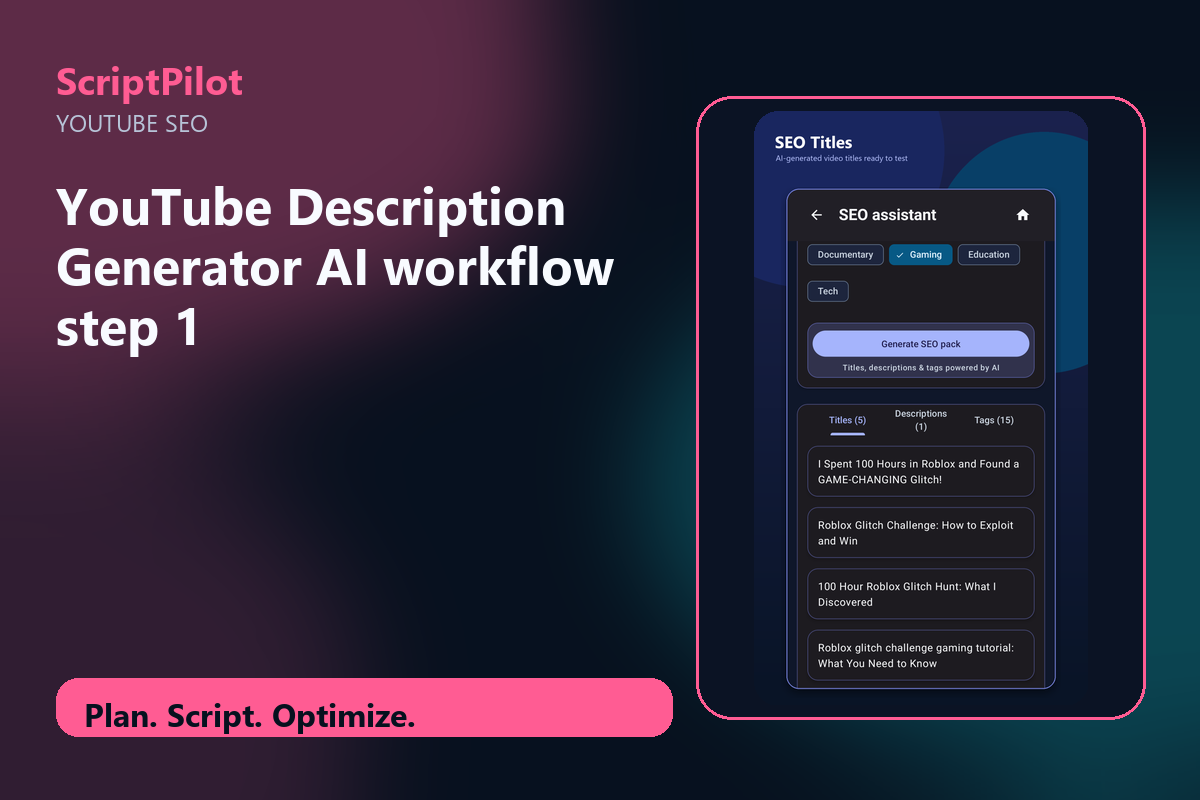
Build one clear content promise
Before drafting, write one sentence that starts with: after watching this, the viewer can. That sentence keeps the topic from drifting. It also makes the title, hook, description, and call to action easier to align. If the promise sounds vague, narrow the scope. A smaller video with a specific outcome usually feels more useful than a broad video that tries to cover every possible angle.
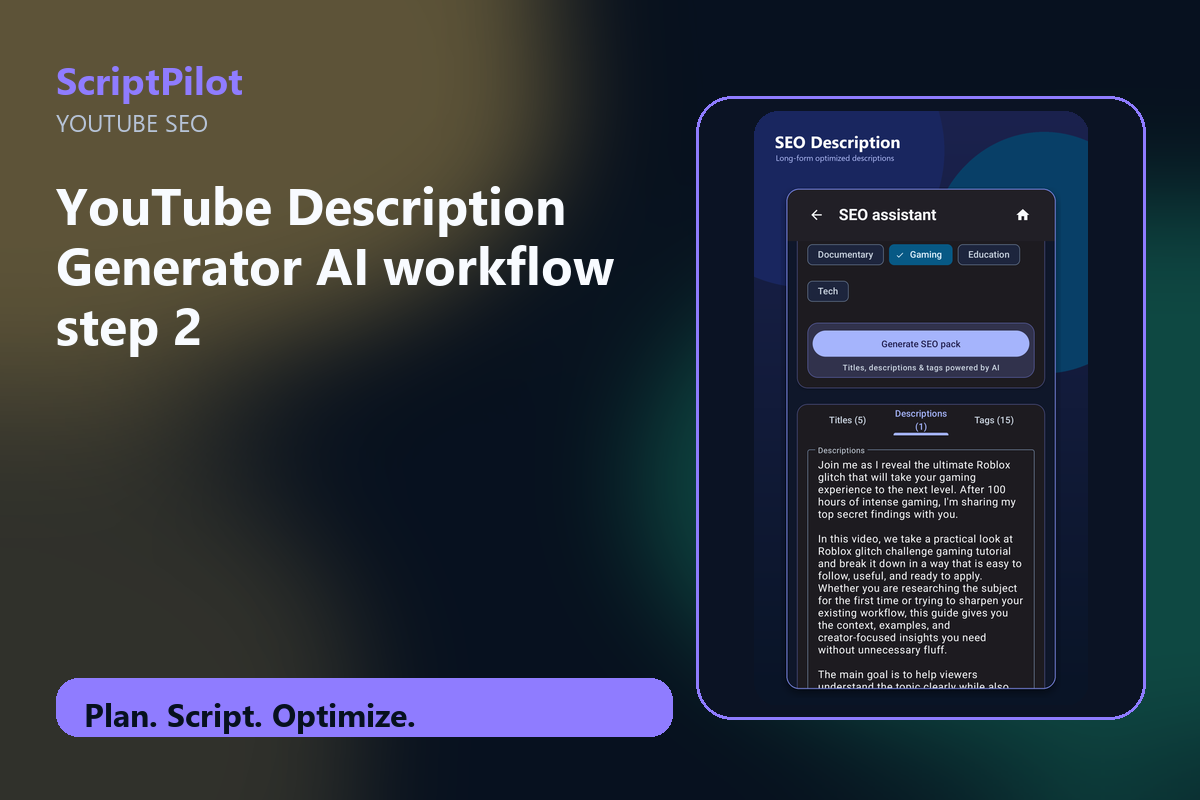
Use screenshots as workflow proof
A screenshot is most useful when it supports a specific step. Show the trend screen when explaining research, the idea screen when choosing angles, the script screen when building structure, the Shorts screen for short-form workflow, and the SEO screen when packaging the video. This also helps the blog feel concrete: the reader can see the workflow instead of only reading about it.
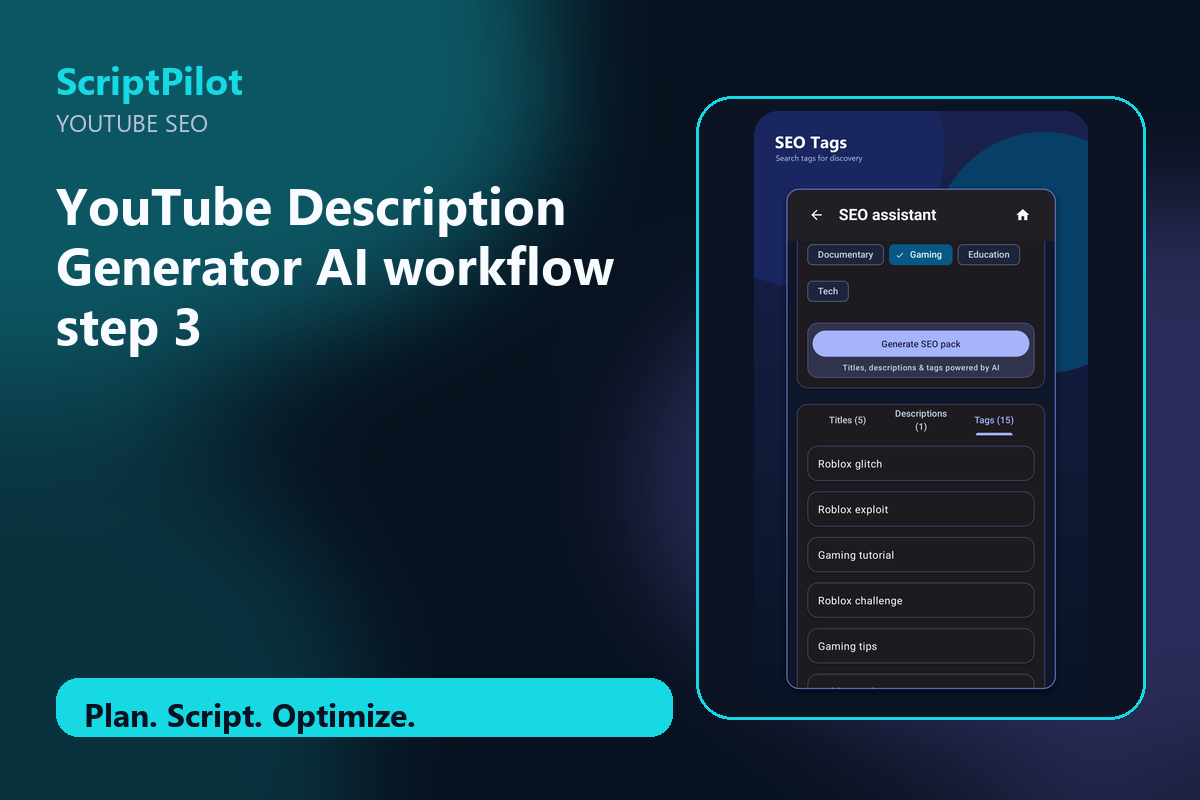
Before and after example
Before: youtube description generator AI is only a phrase in a planning doc. After: it becomes a video brief with one viewer problem, one title direction, one script angle, and one metadata plan. That shift is what makes the workflow publishable. The keyword still matters, but it works as a guide for decisions instead of being repeated unnaturally in every sentence.
Where ScriptPilot fits
ScriptPilot brings trend discovery, idea generation, AI scriptwriting, Shorts creation, and YouTube SEO into one creator workflow. Use it when you want the next step to be obvious: find the trend, generate the idea, draft the script, create the Short, or package the SEO metadata. Use the web app at https://scriptpilot.studio or install the Android app from Google Play: https://play.google.com/store/apps/details?id=com.mic.scriptpilot.
SEO checklist for this workflow
Use the target keyword naturally in the title, the opening paragraph, one subheading, and the meta description. Add close variants where they fit, such as YouTube creator tools, AI content planning, video script workflow, YouTube Shorts strategy, and YouTube SEO assistant. Avoid repeating youtube description generator AI in every paragraph. Search engines and readers both reward clarity more than forced repetition.
A strong creator-focused post should also answer the next question a reader might ask. If the reader came for trend research, show how to turn the trend into an idea. If they came for a script, show how the hook, body, and CTA connect. If they came for SEO, show how the title, description, tags, and thumbnail promise should work together.
Suggested publishing workflow
Start with the keyword and write the viewer promise. Choose the ScriptPilot screen that supports that promise. Draft the first version, then check whether the social caption, blog title, pin title, and video metadata are all describing the same outcome. This keeps the campaign consistent across Google Search, Pinterest, LinkedIn, X, Instagram, Facebook, and YouTube.
Summary
Use youtube description generator AI as a planning prompt, not a stuffing tactic. Keep the promise specific, support the workflow with real screenshots, and make every asset point toward the same viewer outcome.
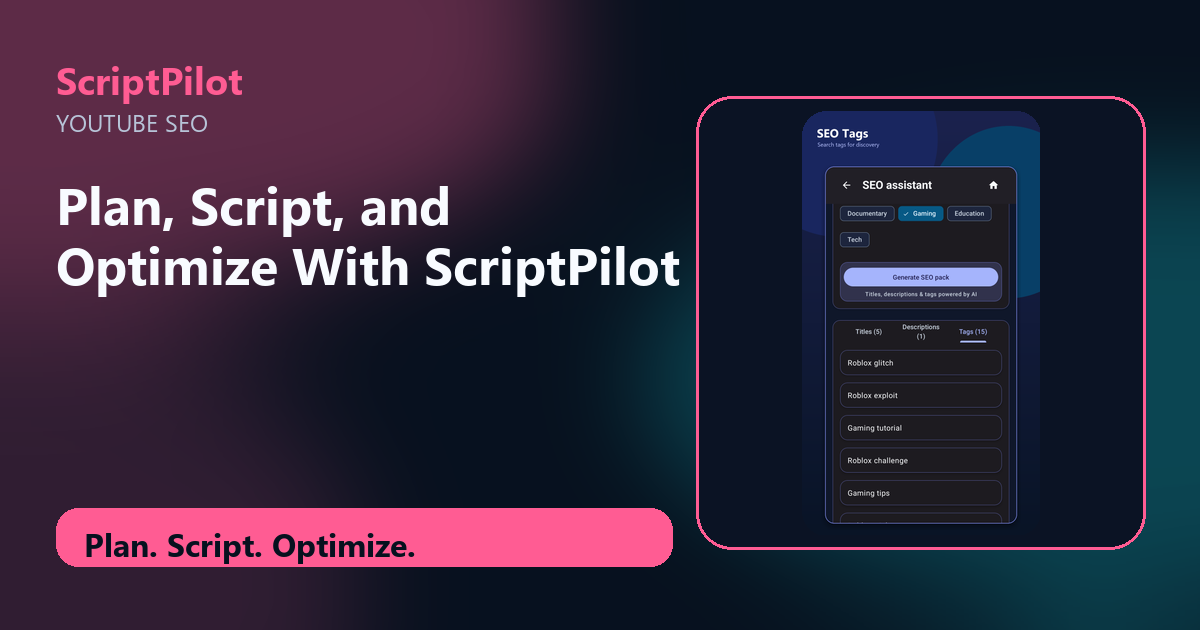
Start with ScriptPilot on the web: https://scriptpilot.studio. Get the Android app: Google Play.